

Picking paint colors sounds like the easy, fun part of a remodel. You wander the paint aisle, grab a few swatches, hold them up to the light, and imagine your new living room. Then reality hits. The “quick refresh” you pictured suddenly involves primer choices, gallon estimates, labor quotes, and a budget that keeps creeping upward.
Here’s the thing most first-time remodelers miss: paint is one of the few remodel decisions that affects both your daily happiness and your resale value. Choose well, and you get a space that feels fresh, flattering, and worth every dollar. Choose poorly, and you’re repainting in eighteen months or knocking thousands off a future sale price.
This guide walks you through paint color choices from the ground up, assuming you’ve never done this before. We’ll cover how paint pricing actually works, how to match colors to your budget tier, how to think about resale, and how to avoid the classic beginner mistakes that quietly drain your remodel fund.
Why Paint Is the Secret Weapon of Any Remodel
Paint does something no other remodel element can do at the same price point. It changes the entire feel of a room in a single weekend. New floors are gorgeous, but they cost thousands. New cabinets can bankrupt a small kitchen. Paint, by comparison, can transform the same space for a fraction of the cost.
That’s why so many homeowners start here. According to Angi, interior painting was one of the most common remodeling projects of the year, with 29% of households tackling one in 2025 and typical costs landing somewhere between $960 and $3,100. That range is wide for a reason, and understanding why will save you from sticker shock later.
Paint is also forgiving. If you pick the wrong tile, you live with it for a decade. If you pick the wrong wall color, you repaint. That built-in flexibility is exactly what makes it the ideal starting point for a beginner tackling their first remodel.
How Paint Costs Actually Break Down
Before you can match colors to a budget, you need to know where your money goes. New remodelers almost always underestimate this, because the price on a gallon of paint is just the tip of the iceberg.
The real cost hides in labor. As noted by Invoice Fly, the bulk of a paint job’s price tag comes from labor rather than materials, often making up 70 to 80 percent of the total. That means your color choice indirectly affects cost, because darker shades and deep reds often need extra coats, specialty primers, or a more skilled painter to apply evenly.
Here’s a quick breakdown of what you’re actually paying for:
- Prep work: patching, sanding, caulking, and taping
- Primer: often required for color changes or problem walls
- Paint itself: usually two coats, sometimes three for bold colors
- Labor: the single biggest line item on most quotes
- Trim and ceiling work: priced separately from walls
- Cleanup and touch-ups: small but rarely free
Once you see the full picture, it becomes much easier to understand why a “simple” whole-home repaint can balloon in cost and why color choice is part of that equation.
Matching Color Choices to Your Budget Tier
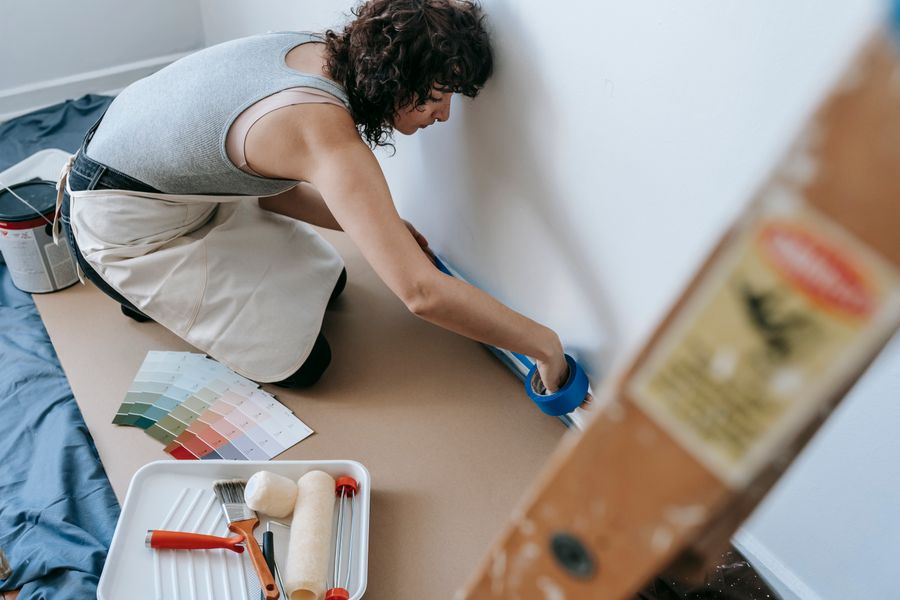
Not every budget supports every color strategy, and that’s okay. The trick is being honest about which tier you’re in before you fall in love with a swatch. Let’s break the beginner budget down into three realistic tiers.
The Small-Budget Refresh
If you’ve got a few hundred dollars and a weekend, you’re in DIY territory. Stick with light, neutral colors. Soft whites, warm greiges, and pale taupes forgive uneven application, work with existing furniture, and usually only need one coat over a similar base. You save money on paint, primer, and your own sanity.
The Mid-Range Remodel
With a few thousand dollars to spend, you can afford a pro painter for the main living areas. This is where you can start playing with accent walls, deeper tones, and coordinated color palettes across rooms. According to DIY Calc Tools, a full interior repaint of a 2,000-square-foot home typically runs $2,500 to $8,000 once walls, ceilings, trim, and doors are included. Knowing that upfront helps you decide whether to paint the whole house or focus on the rooms that matter most.
The Full Remodel
If painting is part of a larger renovation, color choice becomes strategic. You’re coordinating with new flooring, cabinets, countertops, and lighting. This is also the stage where people start researching how to finance a home remodel, because paint is just one piece of a much bigger budget puzzle.
Color Choices That Actually Add Resale Value
Here’s where beginners get surprised: some paint colors literally put money back in your pocket when you sell. Buyers react to color, often subconsciously, and that reaction shows up in their offers.
According to Pro House Maintenance, a 2025 Zillow study of more than 4,200 buyers found that charcoal gray living rooms boosted offers by around $2,593, navy blue bedrooms by $1,815, and olive green kitchens by $1,597 compared to less appealing colors. That’s real money, tied directly to a decision that costs the same as any other paint job.
A few takeaways for the resale-minded remodeler:
- Moody, saturated colors are winning in key rooms
- Living rooms respond well to sophisticated grays
- Bedrooms benefit from calming, deeper blues
- Kitchens can handle earthy greens better than most spaces
- Beige-everywhere is no longer the automatic safe bet
That doesn’t mean you have to paint your whole house in trendy tones. It means that when you’re choosing between two colors you both like, the one with resale appeal is usually worth the small nudge.
Smart Ways to Stretch a Paint Budget
Once you’ve picked your colors, the next step is making your money go further. Beginners often blow their budget on the wrong things, like premium paint in a hallway nobody notices, while skimping on the room where they spend every evening.
Start by prioritizing visible, high-traffic spaces. The living room, kitchen, and primary bedroom deserve your best paint and your best painter. Guest rooms, closets, and utility spaces can use mid-grade paint without anyone noticing.
Where to Splurge vs. Where to Save
Splurge on finishes in rooms that take a beating. Kitchens and bathrooms need scrubbable paint. Trim throughout the house takes abuse, so a durable semi-gloss pays off. Save by buying standard flat or eggshell for low-traffic rooms, and skip designer brands when a mid-tier equivalent performs just as well.
Here are a few more budget-stretching moves beginners can use right away:
- Buy sample pots before committing to a full gallon
- Paint one wall first and live with it for 48 hours
- Reuse leftover paint for touch-ups instead of buying new
- Ask your painter about returned or mistinted gallons at a discount
- Schedule painting in the off-season for better labor rates
These small habits add up to real savings over the course of a full remodel.
Where to Find Inspiration Without Losing Your Mind

The internet is both the best and worst place to look for paint ideas. You can scroll for hours and end up more confused than when you started. The fix is to narrow your inputs early.
Pick two or three sources you trust and stop there. Magazines, a couple of designer blogs, and curated Home Design & Decor Ideas boards are plenty. The goal isn’t to see every color on earth. It’s to spot patterns in what you keep coming back to, because those patterns reveal your actual taste.
Building a Simple Mood Board for Styling and Decor Inspiration
You don’t need special software. A folder on your phone works fine. Save ten to fifteen images of rooms you love, then look at them side by side. Note the common threads: warm vs. cool, bold vs. soft, matte vs. glossy. Those patterns become your paint shortlist. Pair that shortlist with fabric swatches, flooring samples, and anything else in the room, and you’ll make confident decisions instead of panicked ones. For bigger projects, pairing those choices with interior updates that maximize ROI helps make sure your paint complements the rest of the renovation rather than competing with it.
Conclusion
Paint is the rare remodel choice that’s affordable, flexible, and genuinely impactful. When you understand how costs break down, which colors fit your budget tier, and which ones add resale value, you turn a weekend chore into a strategic decision. That’s the shift that separates a frustrating paint job from one that makes your whole home feel brand new.
The beginner playbook is simple. Know your budget before you shop. Prioritize the rooms you actually live in. Choose colors that match both your taste and your long-term plans for the house. And don’t be afraid to test, sample, and sleep on it before committing.
Do that, and your paint choices won’t just complement your remodel; they’ll quietly add value to every room they touch.
