

Staring down a major home project, it is tempting to grab a weekend’s worth of YouTube tutorials and tackle it yourself to save money. But some jobs carry risks, code requirements, or long-term consequences that make professional expertise the smarter investment. Knowing where the line sits between a satisfying DIY win and a costly mistake can protect your home, your budget, and your safety. This guide walks through the most common major projects homeowners face and explains where hiring out simply makes more sense.
Assessing Roof Damage and Repairs
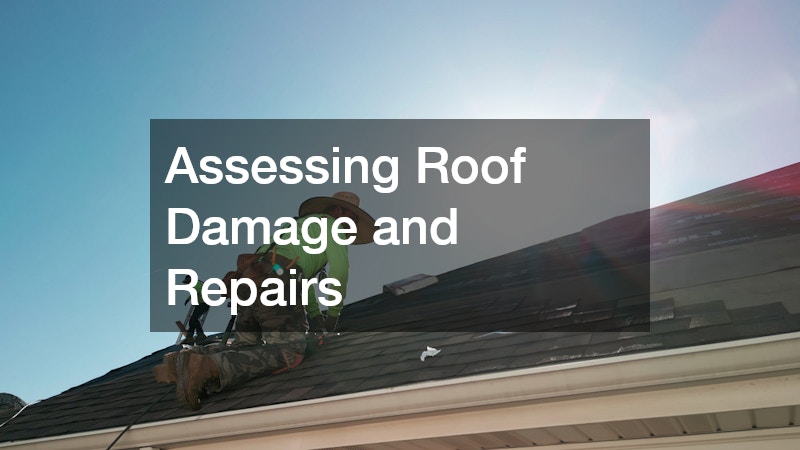
A roof is one of the least forgiving areas for trial and error, since a missed leak or improperly sealed flashing can lead to rot, mold, and structural damage long before you notice a problem indoors. Water can travel along rafters and wiring for months, showing up as a stain on a ceiling far from the original entry point. By the time that happens, a $200 shingle fix can turn into a $5,000 sheathing and drywall repair.
Climbing onto a steep or high roof also carries real injury risk, and most homeowners lack the harness systems, stabilized ladders, and roof jacks that trained crews use daily. Falls from roofs send tens of thousands of people to emergency rooms every year, and even a short slip on a wet or mossy surface can cause serious injury. Professionals also know how to distribute their weight around trusses and valleys to avoid causing hidden damage while inspecting.
When shingles are cracked or curling, granules are piling up in gutters, flashing around chimneys and vents looks lifted, or you notice daylight through the attic boards, it is time to call in help rather than experiment. A licensed roofer can also check ventilation, insulation, and decking condition in the same visit, catching issues a homeowner’s ground-level glance would miss entirely.
Roof damage isn’t always as obvious as a missing shingle, which is why a professional evaluation matters before any repair work begins. Issues like granule loss, soft decking, or hairline cracks in flashing can go unnoticed from the ground but signal problems that will worsen with time. Getting the best roof repair for your situation often means comparing at least two or three quotes and asking each contractor how they handle underlayment, ventilation, and warranty coverage.
Warranty terms alone can vary significantly, ranging from a basic one-year labor guarantee to manufacturer-backed coverage lasting 25 years or more, so it pays to ask what voids that protection. Ventilation is another detail worth pressing on, since poor attic airflow can shorten shingle lifespan by trapping heat and moisture underneath the roofing material.
A reputable residential roofing company will also inspect surrounding areas like chimneys, skylights, and vents, since leaks frequently originate at these transition points rather than the shingles themselves. Flashing around a chimney, for example, can corrode or shift over years of temperature swings, creating a gap invisible from a casual glance but large enough to let water seep into the attic during heavy rain.
This kind of full-system assessment, often supported by moisture meters or infrared scans to detect hidden water intrusion, is difficult to replicate with a ladder and a tube of caulk.
- Look for granule loss (visible in gutters as coarse, sand-like debris), curling or cupping shingles, dark streaks, or sagging rooflines as early warning signs of deeper structural damage
- Check attic spaces for daylight through the roof boards, water stains, or musty odors, which often signal leaks before ceiling damage appears
- Ask contractors about manufacturer certifications (like GAF Master Elite or Owens Corning Platinum), which often extend warranty length to 25-50 years versus standard coverage
- Get a written scope of work before any tear-off begins, specifying materials, layer removal, decking replacement costs, and cleanup responsibilities
- Request at least three itemized quotes to compare pricing per square (100 sq. ft.) and spot outliers that may indicate corner-cutting
- Confirm insurance and licensing before allowing crews on your property, and ask for a certificate of insurance naming you as an additional insured for the project’s duration
Planning a Full Kitchen Overhaul

Few projects touch as many trades at once as a kitchen renovation, which typically involves electrical, plumbing, cabinetry, flooring, and sometimes structural changes if walls are being removed. Attempting this piecemeal as a DIY project often results in mismatched timelines, code violations, or appliances that do not fit properly once cabinets are installed. Professionals coordinate these moving parts so plumbing rough-ins align with cabinet placement and electrical outlets meet current code for GFCI protection near water sources.
Beyond logistics, a well-executed kitchen renovation also affects resale value more than almost any other room in the house, so mistakes are expensive to undo. Homeowners who try to save money by skipping permits sometimes find those shortcuts surface during a future home sale inspection. Working with an experienced team from the start avoids that headache entirely.
- Confirm whether load-bearing walls are involved before demolition begins
- Ask about lead times for custom cabinetry, which can run several months
- Verify that plumbing and electrical work will be permitted and inspected
- Discuss ventilation upgrades, especially for gas ranges or large hoods
Driveways, Patios, and Foundation Work

Concrete looks simple on the surface, but getting the mix, curing time, and grading right requires real technical knowledge. Poorly prepared subgrade or incorrect control joint spacing leads to cracking within a year or two, which is a common complaint among homeowners who attempted a DIY pour. Concrete contractors bring specialized equipment for mixing, leveling, and finishing that most homeowners simply do not own or know how to use safely.
Foundation-adjacent work is even less forgiving of mistakes, since drainage errors can direct water toward your home instead of away from it. A professional will grade the slab to shed water properly and reinforce it with rebar or wire mesh where the load demands it. These details are invisible once the project is finished but determine whether the surface lasts five years or thirty.
- Ask about curing time before the surface can handle vehicle weight
- Request information on reinforcement methods for driveways versus walkways
- Confirm proper drainage slope away from the foundation
- Get a timeline that accounts for weather delays during curing
Fixing or Replacing a Malfunctioning Garage Door
A garage door might seem like a simple mechanical fix, but the torsion springs involved store enormous tension and have caused serious injuries when handled without the right tools. Garage door repair often looks like a quick DIY job until the cable slips or the spring releases unexpectedly. Beyond safety, modern openers also include sensors and electronic components that require calibration most homeowners have never worked with.
If your door is sticking, making grinding noises, or reversing unexpectedly, these are signs the tracks or sensors need professional attention rather than a quick lubrication fix. Technicians can also identify whether the issue is the door itself or the opener unit, which saves you from replacing a part that was never broken. Given how heavy these doors are, having a trained set of hands manage the repair protects both your property and your family.
- Listen for grinding or popping sounds, which often indicate spring or roller wear
- Test the auto-reverse safety feature regularly
- Avoid DIY spring replacement due to high tension risk
- Ask about smart opener upgrades that add app-based monitoring
Keeping Your Home Comfortable Year-Round
Heating and cooling systems involve gas lines, electrical circuits, and refrigerant handling that fall under strict safety codes for good reason. Heating companies employ technicians certified to test combustion efficiency, check for carbon monoxide leaks, and size a new furnace correctly for your square footage. Getting the sizing wrong, which is a common DIY mistake, leads to a system that short-cycles or fails to heat evenly throughout the house.
Annual maintenance visits also catch small problems, like a cracked heat exchanger or a failing igniter, before they turn into a mid-winter breakdown. Many manufacturers require proof of professional installation and servicing to keep warranties valid, which is another reason to avoid the DIY route on anything beyond filter changes. A properly serviced system also runs more efficiently, which shows up as lower utility bills over time.
- Schedule furnace inspections before the start of each heating season
- Replace air filters monthly during heavy use periods
- Ask about carbon monoxide detector placement near sleeping areas
- Request efficiency ratings when comparing new system quotes
Bringing Automation Into Your Living Space

Smart home automation and integration has become one of the more popular upgrades homeowners attempt on their own, and simple devices like smart bulbs or plugs are genuinely beginner-friendly. Trouble starts when homeowners try to network whole-house systems, including security cameras, thermostats, locks, and lighting, all on one unified platform. Interference between devices, weak Wi-Fi coverage, and conflicting app ecosystems can turn a promising upgrade into a frustrating mess.
A professional installer can design a network with proper access points, hardwired connections where needed, and a centralized hub that actually talks to every device you own. This matters even more for security-related components like smart locks and cameras, where a poorly configured system could leave gaps a determined intruder might exploit. Getting the wiring and network architecture right the first time also saves you from tearing into walls again later.
- Map out which rooms need dedicated access points before installation
- Choose a hub platform compatible with your preferred devices
- Prioritize security features like locks and cameras for professional setup
- Ask about firmware update schedules to keep systems protected
Caring for Your Lawn and Landscaping

A healthy lawn depends heavily on proper fertilizing schedules, which vary based on grass type, soil composition, and regional climate. Applying the wrong nutrient mix or timing an application incorrectly can burn grass or feed weeds instead of the lawn itself. Getting a soil test done before committing to any fertilizing plan gives you a much clearer picture of what your yard actually needs.
Pest problems often go hand in hand with landscaping issues, since overgrown vegetation and standing water attract insects and rodents close to the foundation. Pest control companies can identify entry points and nesting areas that are easy to miss during a casual inspection, especially with termites or carpenter ants that cause hidden structural damage. Catching an infestation early, rather than after visible damage appears, saves significant repair costs down the line.
- Test soil pH before choosing a fertilizer formulation
- Keep mulch and vegetation a few inches away from the foundation
- Schedule seasonal pest inspections, especially in humid climates
- Watch for discarded wings or frass as early termite indicators
Tackling Whole-House Renovation Projects
When a project spans multiple rooms or involves structural changes, hiring a home remodeling contractor to manage the entire scope keeps everything moving on a coordinated schedule. These larger jobs require permits, inspections, and sequencing between trades that becomes difficult to track without project management experience. A contractor also carries liability insurance that protects you if something goes wrong mid-project, which a DIY approach simply cannot offer.
Beyond the logistics, a contractor’s established relationships with suppliers and subcontractors often translate into better pricing and shorter lead times than a homeowner could negotiate independently. This is especially valuable for additions or layout changes where engineering input is required to confirm structural integrity. The upfront cost of hiring professional oversight is frequently offset by avoiding costly rework later.
- Ask for references from recently completed projects of similar scope
- Confirm how change orders and unexpected costs will be handled
- Request a detailed timeline with milestone check-ins
- Verify licensing and insurance coverage before signing a contract
Deciding When a Project Is Truly DIY-Friendly
Not every home project requires a professional, and knowing which tasks are safe to handle yourself helps you allocate your budget wisely. Cosmetic work like painting, installing shelving, or replacing cabinet hardware carries low risk and forgiving margins for error. The deciding factors usually come down to whether the project involves structural elements, gas or electrical lines, high fall risk, or code-required permits.
A useful gut check is to ask whether a mistake would be merely inconvenient or genuinely dangerous and expensive to fix. If the answer leans toward danger or expense, it is worth getting at least one professional opinion before starting. This balanced approach lets you save money where it makes sense while protecting the investments that matter most.
- Reserve DIY efforts for cosmetic or low-risk tasks
- Get professional input whenever gas, electrical, or structural work is involved
- Factor in tool costs, since rented equipment can erase DIY savings
- When in doubt, request a quick consultation before committing to either path
Major home projects rarely fail because homeowners lack enthusiasm, they fail because certain tasks demand specialized tools, licensing, and experience that only professionals bring to the table. Weighing the true cost of mistakes against the price of expert help puts the decision in perspective for almost any project on your list. Before you pick up a tool for your next big job, take a moment to research qualified local professionals and get a few quotes to compare. That small step now can save considerable time, money, and stress later.
