

A severe storm warning gives you a narrow window to protect the property you have worked hard to build. In just 30 minutes, you can walk your yard and home exterior to catch the weak points that turn a bad storm into a costly disaster. This checklist focuses on the systems most likely to fail under heavy wind, rain, and debris so you know exactly where to look first. Use it every time the sky turns dark, not just once a season.
Secure Loose Outdoor Structures and Fabric Covers
Anything with fabric or a large flat surface catches wind like a sail, so retractable awnings should be your first stop during a pre-storm walkthrough. Extend them fully closed and locked, or retract them entirely if the mechanism allows, since a half-open awning is far more likely to tear or rip its mounting brackets from the wall.
Patio umbrellas, shade sails, and canopy tents need the same attention, and anything that cannot be secured should be brought indoors or laid flat and weighted down. Check the hardware connecting these structures to your siding or fascia, because loose screws or corroded brackets are often the first failure point in high wind.
- Close and lock all awnings rather than leaving them partially extended
- Remove umbrellas from patio tables and store them in a garage or shed
- Weigh down or bring in shade sails, canopy tents, and pop-up shelters
- Inspect mounting brackets for rust or loosening before storm season begins
Clear Gutters and Downspouts Before the Rain Arrives
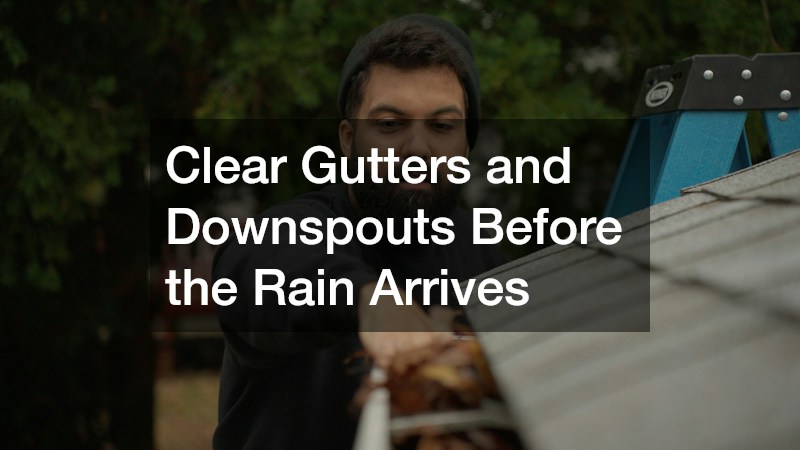
Clogged gutters cannot move water fast enough during a heavy downpour, which sends rain spilling over the edge and pooling right at your foundation. Just a few inches of standing water near your home’s base can seep into basements or crawl spaces within hours, turning a gutter problem into a much costlier repair.
Grab a ladder or simply walk the perimeter of your house and look up. A quick visual check from the ground can reveal sagging sections, overflowing debris, or downspouts pointed the wrong way, all of which get worse once the storm actually hits. Pay close attention to corners and seams, since these joints are where leaks and separations tend to start first.
While you’re at it, make sure downspouts extend at least three to five feet away from the foundation so water gets carried clear of the house rather than dumped right beside it. If a downspout empties onto a slope that drains toward your yard’s low points, consider adding an extension or splash block before the next storm rolls in.
If you notice consistent overflow issues every time it rains, that is a sign it may be time to call a gutter contractor rather than keep patching the problem yourself. A professional can spot hidden issues like hairline cracks, improper pitch, or worn-out hangers that a ground-level glance might miss entirely.
Before the storm hits, walk the perimeter of your house and clear out any leaves, twigs, or granules sitting in the gutters and clogging the downspout openings. A five-minute pass with a garden hose will confirm water is flowing freely and draining out the bottom instead of backing up over the edge.
Make sure downspout extensions are attached and directing water at least five feet away from your foundation walls. Standing water this close to the house is one of the most common causes of basement seepage and soil erosion, so those extra few feet make a real difference during a heavy downpour.
A gutter contractor can also check for proper slope and hidden sagging that is not obvious from a quick glance. Gutters should drop about a quarter inch for every ten feet of length to channel water toward the downspouts, and even a small dip caused by loose hangers can create pooling that overflows during the highest-volume storms of the year.
- Remove leaves and debris from gutters and downspout openings, using a small trowel or gloved hand rather than harsh tools that dent the metal
- Flush gutters with a hose afterward to confirm water flows freely to the downspouts
- Confirm downspout extensions carry water at least 4-6 feet away from the foundation
- Watch for sagging gutter sections that pull away from the fascia, especially near hangers spaced more than 3 feet apart
- Check for visible rust spots, cracked seams, or standing water in gutter troughs after a light rinse
- Schedule a professional inspection if overflow happens in normal rain, since it often signals a hidden clog or improper slope
Walk the Yard for Dead Branches and Unstable Trees
Large trees near your house or power lines pose one of the biggest storm risks to your property, and a fast walk around the yard can flag obvious hazards. Look up for dead limbs, cracked branches, or trees leaning noticeably more than usual, since these are the ones most likely to come down in high wind. Any tree that shows significant rot at the base or roots visibly lifting from the soil needs professional attention well before storm season.
If you spot a tree that looks compromised, contacting a tree removal service now is far cheaper than dealing with storm damage to your roof or fence later. A trained crew can assess whether the tree just needs limb trimming or whether full tree removal is the safer long-term choice. Waiting until after a storm often means dealing with a downed tree and the damage it caused at the same time.
- Scan the canopy for dead, cracked, or hanging branches
- Note any trees leaning more than they did last season
- Check for exposed or heaving roots near the trunk base
- Get a professional opinion on trees near the house or driveway
Test Your Drainage and Underground Sewer Lines
Heavy rain puts extra strain on everything below ground, and a sluggish drain or gurgling toilet before a storm can be an early warning sign of a bigger problem. If water backs up in your basement floor drain or you notice slow drainage throughout the house, it may point to an issue with your sewer lateral, the pipe connecting your home to the municipal sewer main. This line is often decades old and can crack or collapse under the added pressure of saturated soil.
A quick check of outdoor cleanout caps can tell you whether they are sealed properly, since a loose cap allows floodwater to enter the system in the wrong direction. If your yard has a history of soggy spots or sewer smells after heavy rain, it is worth having the sewer lateral scoped by a professional before the next major storm rolls through.
- Watch for slow drains or gurgling sounds before a storm arrives
- Check that outdoor cleanout caps are seated and sealed
- Note recurring soggy patches or odors that suggest an underground leak
- Have older sewer lines scoped if backups happen more than once
Reinforce Doors and Entry Points Against Wind Pressure
Exterior doors take a direct hit from wind pressure and flying debris, so checking their fit and seal is a quick but important step. Push against each door to feel for give in the frame, and look for daylight around the edges that signals a weak seal letting wind-driven rain inside. Older doors with warped frames or worn weatherstripping are far more likely to fail during a sustained storm.
If a door frame feels loose or the hinges show visible rust and stress, it may be time to consider door installation rather than another temporary fix. Modern door installation options include reinforced frames and impact-rated glass that hold up far better against wind-borne debris than older builds. This is not something to tackle during the 30-minute checklist itself, but flagging the problem now means you can act before the next major system arrives.
- Push on each exterior door to check for frame movement
- Look for gaps or light around the door edges
- Inspect weatherstripping for cracks or compression damage
- Note any door that sticks, sags, or fails to latch fully
Confirm Your Safe Room or Shelter Plan Is Ready
Every household in a storm-prone area needs a designated safe spot, and checking it should take only a couple of minutes. If your home has a basement, interior closet, or dedicated storm shelters, confirm the space is clear of clutter and stocked with a flashlight, water, and a battery-powered radio. Families without a hardened space in the home should know the nearest public shelter location and how long it takes to get there.
For homeowners in tornado- or hurricane-prone regions, installed storm shelters offer a level of protection that an interior closet simply cannot match. If you already have one, use these thirty minutes to check that the door seals properly and the access path is not blocked by yard equipment or furniture. A shelter is only useful if everyone in the household knows exactly where it is and how to get inside quickly.
- Clear the path to your safe room or shelter of any obstacles
- Stock a flashlight, water, and battery radio inside the space
- Confirm shelter doors seal and latch correctly
- Make sure every household member knows the location and plan
Check the Roof for Loose Shingles and Weak Spots
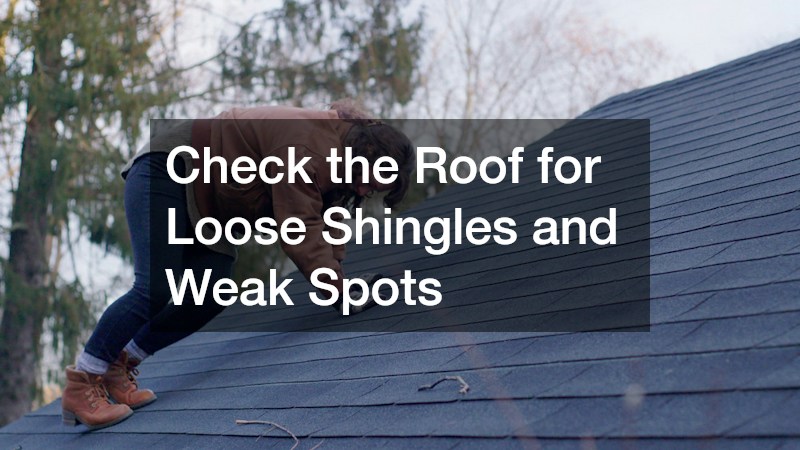
Roof damage is one of the most expensive outcomes of a bad storm, and a quick ground-level scan can catch warning signs before wind gets underneath a weak shingle. Look for shingles that are curling, missing granules, or already lifted at the edges, since these spots are the most likely place for wind to peel back a larger section. Binoculars can help you get a closer look without climbing a ladder in worsening weather.
If you notice more than a few problem spots, or if your roof is more than fifteen years old, reaching out to local roofers for a pre-storm inspection is a smart investment. Local roofers can spot flashing issues around chimneys and vents that are nearly invisible from the ground but become major leak points once wind-driven rain gets involved. Catching these problems early is almost always cheaper than repairing interior water damage after the fact.
- Scan for curling, cracked, or missing shingles from the ground
- Check flashing around chimneys, vents, and skylights for gaps
- Note any granule buildup in gutters, which signals shingle wear
- Book a professional roof inspection if the roof is aging or storm-worn
Protect Water Heaters and Utility Equipment From Flooding
Basements and utility rooms are vulnerable during a major storm, especially if water intrusion is a possibility in your area. Check that your water heater sits on a raised platform or block if it is located in a flood-prone basement, since even a few inches of water can ruin the unit and create an electrical hazard. Older units nearing the end of their expected lifespan are especially at risk, and storm damage is often the final straw that forces an unplanned water heater replacement.
If your water heater is already showing rust, sediment buildup, or inconsistent temperatures, consider scheduling a water heater replacement before storm season rather than during an emergency. Planning the replacement in advance gives you more control over cost and timing compared to an urgent call after a flood has already caused damage. It is a small step that can save both money and a major inconvenience down the road.
- Confirm your water heater is elevated in flood-prone basements
- Check for rust, leaks, or sediment buildup around the tank
- Move nearby stored items off the floor to prevent water damage
- Plan replacement in advance if the unit is nearing the end of its life
Running through this checklist takes less time than most people spend deciding what to watch on television, yet it can prevent thousands of dollars in storm damage to your home and yard. Start with the quick visual checks around your roof, gutters, and trees, then work inward toward doors, utilities, and your family’s shelter plan. Keep a printed or saved copy of this list so you are not scrambling to remember every step when the next storm warning appears. A little preparation now is what stands between a stressful night and a genuinely damaging one.
